You want to know if your light is full spectrum? The fastest way is to compare the color of your light with natural daylight. A full spectrum light gives off a balanced mix of colors, just like sunlight. This matters because the right light can make a big difference. For example, you may see faster seedling growth, healthier leaves, and better photosynthesis in your plants. You’ll find easy steps here to help you figure it out at home.
Key Takeaways
-
Try the white paper test to see if your light is bright and clear like daylight.
-
Look at the Color Rendering Index (CRI) and color temperature on the box. You want a CRI over 95 and a temperature from 5000K to 6500K.
-
Put colors under your light and then under sunlight. Full spectrum light makes colors look bright and real.
-
Check for trusted labels like ENERGY STAR or UL Listed. These show the light is safe and good quality.
-
Do not trust only what ads say. Always check the technical details to make sure the light is really full spectrum.
Quick Ways to Check Full Spectrum Light
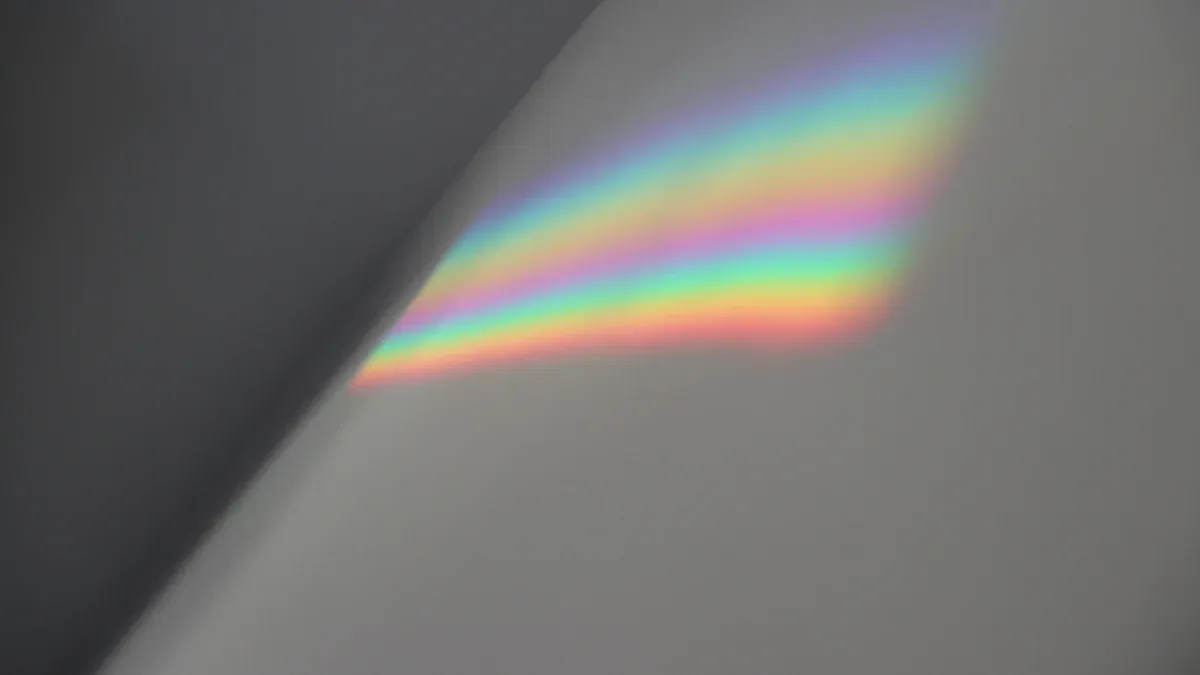
Fast At-Home Tests
You don’t need fancy equipment to figure out if your light is full spectrum. You can start with a few simple tricks right at home. First, grab a white sheet of paper and place it under your light. Look at the color of the paper. If it looks bright and clean, almost like it does outside in daylight, your light might be close to full spectrum. If the paper looks yellow, blue, or dull, your light probably misses some colors.
You can also use a smartphone app that measures light intensity. Many apps let you check the brightness in lux. While this won’t tell you everything, it helps you compare your light to natural sunlight. If you want to go a step further, buy a basic lux meter online. Place it under your light and then outside on a sunny day. Compare the readings. Full spectrum light should give you a similar result, though not exactly the same.
Tip: Try these tests at different times of day. Natural sunlight changes, so you’ll get a better idea if your light matches up.
Visual Color Comparison
Now, let’s talk about color. Stand near a window during the day and turn on your light. Hold up objects with different colors—red, blue, green, and yellow. See how they look under your light compared to the sunlight. Full spectrum light makes colors pop and look true to life. If colors seem faded or strange, your light might not cover the full range.
You can also check your skin tone in both lights. Does your skin look natural under your lamp? If it does, that’s a good sign. If it looks odd or washed out, your light may not be full spectrum.
Here’s a quick checklist for you:
-
Use a white paper test.
-
Try a lux meter or app.
-
Compare colors with daylight.
-
Check your skin tone.
These easy steps help you spot full spectrum light without any hassle.
What Is Full Spectrum Light?
Simple Definition
You might wonder what makes a light "full spectrum." In simple terms, full spectrum light covers all the colors and wavelengths that you find in natural sunlight. This includes not just the visible colors you see—like red, blue, and green—but also some ultraviolet (UV) and infrared (IR) light. Sunlight is the best example of full spectrum light. Most regular bulbs only give off a small part of the light spectrum. Full spectrum light tries to copy sunlight as closely as possible, with a color temperature between 5000K and 6500K and a high Color Rendering Index (CRI), usually above 96. This means things look more natural and colors appear true to life under this kind of light.
Fun Fact: Scientists started studying full spectrum light in the 1960s. They found that balanced artificial light could help both people and plants stay healthy, just like sunlight does.
Why It’s Important?
You might ask, “Why should I care if my light is full spectrum?” The answer is simple: it can make a big difference for your health, mood, and even your plants. Full spectrum light supports your body’s natural rhythms, helps you sleep better, and can boost your mood. For plants, it means faster growth and healthier leaves.
Here’s a quick look at how full spectrum light helps:
|
Application |
Benefit |
|---|---|
|
Human Health |
Improves sleep, boosts mood, and reduces fatigue |
|
Office Productivity |
Helps you focus and see colors clearly |
|
Plant Growth |
Speeds up growth, increases yield, and makes plants stronger |
UV and infrared light also play special roles:
|
Type of Light |
Benefits |
|---|---|
|
UV Light |
Helps your body make vitamin D, which keeps bones strong and boosts your mood |
|
Infrared Light |
Helps your cells heal and can reduce pain or muscle soreness |
If you use lights that are not full spectrum, you might feel tired, get headaches, or even have trouble sleeping. Plants may grow slower or look unhealthy. So, choosing full spectrum light can help you and your plants thrive.
Full Spectrum Light: Technical Indicators

CRI and Color Temperature
If you want to know if your light is full spectrum, check two numbers. These are CRI and color temperature. CRI means Color Rendering Index. This number shows how well your light displays colors. It compares your light to natural sunlight. A higher CRI means colors look more real and bright.
-
A good full spectrum light has a CRI of 95 or higher.
-
The best ones have a CRI of at least 99.
-
Sunlight has a CRI of 100, which is perfect.
Color temperature is also important. It tells you if the light feels warm or cool. You measure it in Kelvin (K).
-
Full spectrum lights usually have a color temperature from 3000K to 6500K.
-
Sunlight at noon is about 6500K. This looks bright and white.
Tip: You can find CRI and color temperature on the box or online. If you see a CRI above 95 and a color temperature near 6500K, you are close to full spectrum.
Spectral Distribution
Spectral distribution means what colors and wavelengths your light gives off. Sunlight covers every color you can see. It also has some you cannot see, like ultraviolet (UV) and infrared (IR). This mix makes sunlight special.
Most full spectrum bulbs focus on visible colors. Many do not have UV or IR. That means they do not match sunlight exactly. Sunlight gives a balanced mix of all visible colors and some invisible ones. Many artificial lights, like LEDs, miss infrared. Infrared is a big part of sunlight’s energy.
When you look at a spectral distribution chart, look for a smooth curve. There should not be big gaps. This means your light covers all the colors, like the sun.
Note: Some bulbs say "full spectrum" but do not have UV or IR. Always check the details if you need those for plants or health.
Using a Spectrometer
If you want to be exact, use a spectrometer. This tool measures what wavelengths your light makes. Some spectrometers are easy to use at home. Here are a few types you might see:
|
Spectrometer |
Key Features |
Applications |
|---|---|---|
|
GL SPECTROLUX |
Small, not expensive, gives accurate results, measures SPD, CRI, CCT, and more. |
Checking lighting setups, comparing lights, teaching about lighting systems. |
|
ILT350 Chroma Meter |
Three speeds, spectral resolution of 10 nm, accuracy ±3 nm. |
Checking phototherapy lights, measuring white light, car and home lighting. |
|
VIS Spectroscopy |
High sensitivity and resolution, small size, TE-cooled options. |
Used for visible light in many places, like homes and businesses. |
You do not need to be a scientist to use these tools. Many have easy instructions and connect to your phone or computer. You can see a graph that shows if your light covers all the colors, like sunlight.
Smart lighting makes it easy to get full spectrum light at home. New LED bulbs give better color, save energy, and let you change the light for your needs.
If you want the best for your health, work, or plants, check these technical indicators. They help you choose a light that is close to sunlight.
Product Labels and Certifications
Common Label Terms
When you shop for lights, you see lots of words on the box. Some labels say “daylight,” “natural white,” or “sunlight.” These sound good, but they don’t always mean the light is full spectrum. You might also spot “broad spectrum” or “balanced light.” These terms can confuse you. Always look for clear numbers like CRI and color temperature. If the box says CRI 95+ and color temperature between 5000K and 6500K, you’re on the right track.
Here’s a quick list of label terms you might see:
-
Daylight
-
Natural light
-
Sunlight
-
Broad spectrum
-
Balanced spectrum
Tip: Don’t trust fancy words alone. Check for real numbers and details.
Recognized Certifications
Certifications help you know if a light meets certain standards. Some trusted certifications include:
|
Certification |
What It Means |
|---|---|
|
ENERGY STAR |
Saves energy, meets quality |
|
UL Listed |
Safe and tested |
|
DLC Certified |
High performance |
|
CE Mark |
Meets European standards |
You should look for these marks on the box. They show the product passed safety and quality tests. Some lights also have plant-specific certifications. These help if you want to grow healthy plants.
Interpreting Manufacturer Claims
Manufacturers love to use big promises. You might read “full spectrum light” on the package. Sometimes, this means the light covers most visible colors. Other times, it’s just marketing. Always check the technical specs. Look for CRI, color temperature, and spectral charts. If you don’t see these, ask the seller for more info.
Note: If a product only says “full spectrum light” but gives no numbers or certifications, be careful. It might not be what you need.
Misconceptions About Full Spectrum Light
Marketing vs. Reality
You see “full spectrum” everywhere, but not every light lives up to the promise. Many companies use this term to grab your attention. They want you to believe their product matches sunlight perfectly. In reality, marketing claims often stretch the truth. Some lights look bright and white, but they miss important wavelengths. Others get labeled as “1000W equivalent” when they only use a fraction of that power. This can make you expect more than the light can deliver.
Here are some common myths you might hear:
-
All full spectrum lights are the same. Actually, quality and light range vary a lot.
-
Full spectrum lighting only helps people with Seasonal Affective Disorder (SAD). The truth is, it can boost your mood, help you focus, and support plant growth for everyone.
-
White LEDs look natural, but they waste energy on colors plants don’t use. These lights weren’t made for growing, so results may disappoint.
-
Many claims come from marketing teams, not scientific studies. You won’t always find real research behind the hype.
Tip: Always check the technical specs and reviews before you buy. Don’t trust the label alone.
Color Temperature Confusion
You might think color temperature tells you everything about a light. It doesn’t. Color temperature measures how “warm” or “cool” the light looks, using Kelvin (K). A bulb with 6500K looks like daylight, but that doesn’t mean it covers the full spectrum. Some bulbs hit the right color temperature but miss key wavelengths. You need to look at more than just this number.
CRI Limitations
CRI, or Color Rendering Index, helps you see how well a light shows colors. Many people use CRI as the only measure for full spectrum light. That’s not enough. CRI uses just a few color samples, so it misses some details. Other metrics give you a better picture.
Here’s a quick table to show the differences:
|
Metric |
Description |
Strengths/Weaknesses |
|---|---|---|
|
CRI |
Measures color accuracy with 8 or 15 samples. |
Misses saturated colors. |
|
TM-30-15 |
Uses 99 color samples for deeper assessment. |
Shows fidelity and gamut, better color rendering. |
|
CQS |
Uses 15 saturated color samples. |
Fixes CRI’s limits for saturated colors. |
Note: If you want true full spectrum light, look for more than just a high CRI. Check for detailed spectral charts and extra metrics.
You can spot a full spectrum light by using both simple tests and technical checks. Try these steps:
-
Compare your light’s color to daylight.
-
Use a white paper or color test.
-
Check CRI and color temperature on the box.
-
Look for trusted certifications.
Combining these methods helps you see if your light matches natural sunlight. This way, you get better color, energy savings, and a healthier space.
Tip: Don’t trust labels alone. Always check the numbers and how the light looks in real life!
FAQ
How can I tell if my light is full spectrum without special tools?
You can use a white paper test. Place the paper under your light. If it looks bright and clean, like daylight, your light might be full spectrum. Compare colors with sunlight for a quick check.
Does full spectrum light help my mood?
Yes! Full spectrum light can boost your mood. It supports your body’s natural rhythms. You may feel more awake and focused. Many people use it to fight winter blues.
Are all “daylight” bulbs full spectrum?
No, not all “daylight” bulbs are full spectrum. Some only match the color temperature of sunlight. Always check for CRI above 95 and a broad spectral range on the packaging.
Can plants grow better under full spectrum light?
Absolutely! Full spectrum light helps plants grow strong and healthy. You’ll see faster growth, greener leaves, and better flowering. It gives plants the light they need for photosynthesis.
Medical Disclaimer
The information shared by MicroENE, including testimonials, research summaries, or case studies, is for informational use only and does not constitute medical advice. Individual responses to light therapy may vary, and results from studies or customer experiences do not guarantee similar outcomes with MicroENE devices. Always consult your physician before starting light therapy, and do not alter any medical treatments without professional guidance.